
Step sequence decisions
Treat steps and landings as a connected walking sequence
Evaluate concrete steps, landings, rail interfaces, and finish transitions as one route before selecting a repair boundary.
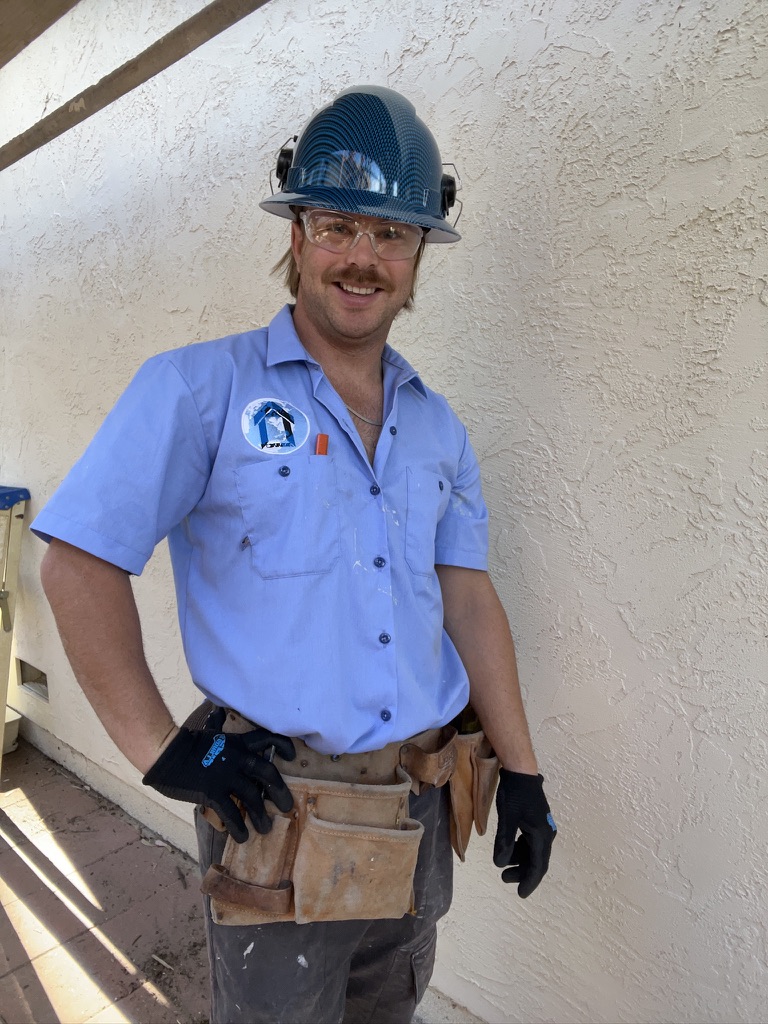
From All World Construction LLC
Owner Austin Mitchell · About AWC · Verify CSLB #1063936 · Updated
A damaged step rarely stands alone. People approach across one surface, place a foot at the edge, use a rail, cross the landing, and reach a door or gate. Repairing only the most visible chip can leave the larger walking sequence unresolved. Before pricing, map each rise, tread, landing edge, railing connection, and adjoining surface. The goal is a scope that clearly explains what changes, what remains, and which observations require more review.
Walk the route in both directions
Photograph the route from the bottom, top, and side. Note visible cracking, loose edges, surface wear, ponding, patched areas, rail movement, and changes where concrete meets another material. Record observations without assigning a hidden cause from appearance alone.
Consider ordinary use with hands full, deliveries, pets, and nighttime lighting. This is practical planning information, not a substitute for property-specific accessibility, structural, or design review when those issues are part of the project.
Choose a boundary that can be explained
A localized repair may retain most of the step or landing. A broader replacement may follow an existing joint, rebuild a complete component, or improve the connection between surfaces. Each option should name its limits and the visible conditions left in place.
Ask what the repair will bond to, how edges will terminate, how forms and demolition can be handled, and whether the railing or adjacent finish interferes. If removal reveals unknown support, reinforcement, embedded items, or ongoing movement, document the condition before expanding work.
Coordinate rails, doors, and finishes
Rail posts and anchors can cross the repair boundary even when they appear outside the damaged spot. Door clearance, threshold protection, stucco edges, tile, paint, and sealant may also require separate scope decisions. Identify who handles each interface.
A concrete repair cannot be used to imply that a railing, foundation, or structural assembly has been diagnosed. When movement, unstable support, or a safety-critical connection is uncertain, the practical next step is targeted review by the responsible expert before that detail is covered.
Stage the route and review the result
Define temporary access, barriers, daily cleanup, weather response, and delivery handling. State whether another entrance remains available and who tells occupants when the route changes. Do not rely on a handwritten sign as the entire access plan.
At closeout, walk the full sequence instead of looking only at the patched edge. Record transitions, surface finish, rail interfaces, remaining work, and reopening direction. When the repair boundary, access, drainage behavior, or underlying condition needs field verification, AWC recommends the $250 Site Evaluation + Written Bid Package. The $250 is credited back if the quoted work is approved within 30 days. Contact AWC at 619-327-9513 or AMitchell@AllWorldConstructions.com.
Planning checklist
- The full walking sequence is photographed from both directions.
- Each repair option states what remains in place.
- Rail, door, threshold, and finish interfaces are assigned.
- Unknown support or movement has a written review path.
- Temporary routing and final reopening are controlled.
Common questions
Can one chipped step be patched by itself?
Sometimes, but the retained edge, support, rail relationship, finish, and connected walking surfaces should be reviewed before choosing that boundary.
Does concrete work include the railing automatically?
No. The proposal should state whether rail removal, protection, reset, anchorage, coating, or expert review is included.
Why inspect the landing if the damage is on a step?
The landing is part of the same walking sequence and may affect transitions, access, water behavior, door clearance, and the practical repair limit.
Related AWC field context
AWC article
Behind AWC: The Part of Contracting You Don’t Usually See
See how investigation, trade coordination, communication, and closeout shape a repair scope.